- I Landed in Olympia on a Rainy Tuesday – By Valerie Krull
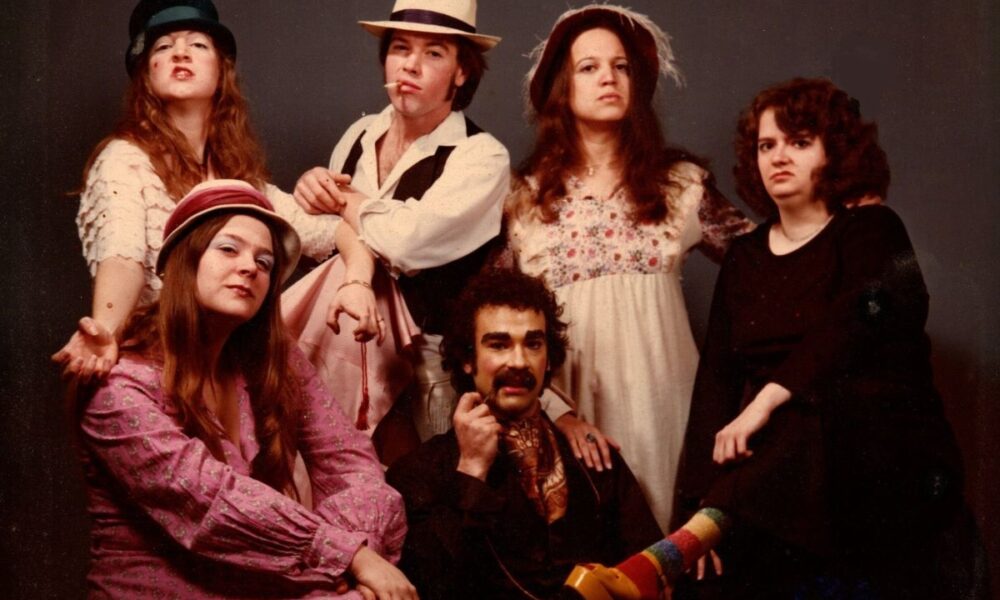
I arrived in Olympia in September of 1981 at the age of 20. I had gone to college the year before in Beloit, Wisconsin, after leaving Missouri. At Beloit College I took a class called Current Issues In Education. This class woke me up to the existence of alternative education and I promptly went to a college catalogue and found three listings for alternative colleges. I got the course catalogue from Evergreen with the picture of Eld Inlet on the cover, and there was no going back.
- Olympia’s First Gay Rights Law – By Anna Schlecht
In 1986, Olympia was not the gay-friendly place we know today. At best, gay folks found little pockets where we felt safe in our jobs and homes and found acceptance. But there were no legal protections against discrimination . . . After a short series of meetings, the gay rights ordinance was drafted. Mayor Daley met with everyone else on the City Council to make sure they all supported it before he brought it forward for a public hearing and a vote . . . the night of the public hearing came. I knew it might get a little nasty when I saw a church bus pull up in the parking lot. The Council Chambers were filled, with many people standing in the back. And although it was hard to tell who was for or against gay rights, it seemed to be evenly split.
- Women Against Violence Against Women (WAVAW) – By Carolyn Byerly
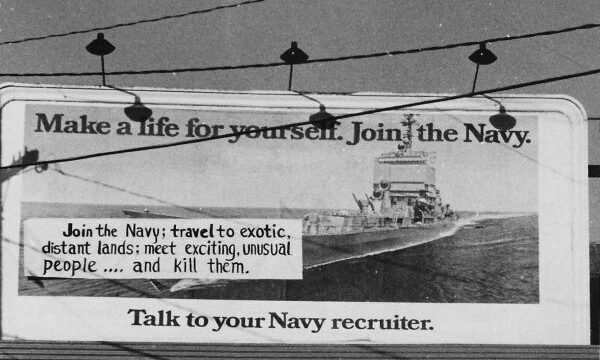
My media activism began in 1977 through a group called Women Against Violence Against Women. WAVAW began in Los Angeles when feminists rebelled against a promotional campaign for the Rolling Stones album Black and Blue . . . The visuals featured . . . a stylized photo of a woman bearing bruises and a gag in her mouth that was captioned “I’m black and blue by the Rolling Stones and I love it!” Feminists were known to scrawl their own messages across these promotionals.
- Safeplace – My Story on Its Origins and Early Work – By Carolyn Byerly
Before there was Safeplace, there were the Rape Relief and the Women’s Shelter programs at the Olympia YWCA. Each had a paid coordinator, with the work of the programs carried on by trained volunteers. That work initially involved taking calls from women who had been battered or sexually assaulted to support them through the police reporting process, hospital exams, finding shelter (if needed), and accompanying them to court. In time, an educational component evolved as both groups were called on to speak to community groups about the problems we addressed. It was cutting edge feminist work, and our community was among the first in the US to establish these programs.
- Remembering The Link – By Emily Ray
They say, “What goes around comes around.” Forty years ago, the Daily Olympian (as it was then named) did not serve our community well. The editor-in-chief turned a blind eye to local social and political issues. The newspaper was generally silent on problems and initiatives concerning race relations, gender, growth management, waste reduction, the environment. When the newspaper did glance at any of these issues, it was with a jaundiced eye . . . One of the people who was angry about the newspaper was Margery Sayre.
- Getting Lumber for the Dome – By Joe Tougas
At one point in the evolution of Cold Comfort Farm the commune members decided to build a geodesic dome. We were then faced with the challenge of finding the materials. The word went out via the invisible network that connected the devotees of the “buy nothing” ethic. The power of a community to “manifest” whatever was needed had proved miraculous in the experience of back-to-the-landers everywhere. The fact that we were seeking material for a geodesic dome clearly helped stimulate and activate that network. What we needed for the frame was a bunch of 2×6s, the longer the better




 I arrived in Olympia in September of 1981 at the age of 20. I had gone to college the year before in Beloit, Wisconsin, after leaving Missouri. At Beloit College I took a class called Current Issues In Education. This class woke me up to the existence of alternative education and I promptly went to a college catalogue and found three listings for alternative colleges. I got the course catalogue from Evergreen with the picture of Eld Inlet on the cover, and there was no going back.
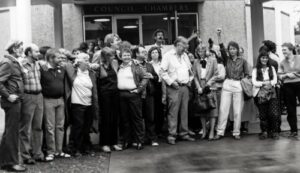 In 1986, Olympia was not the gay-friendly place we know today. At best, gay folks found little pockets where we felt safe in our jobs and homes and found acceptance. But there were no legal protections against discrimination . . . After a short series of meetings, the gay rights ordinance was drafted. Mayor Daley met with everyone else on the City Council to make sure they all supported it before he brought it forward for a public hearing and a vote . . . the night of the public hearing came. I knew it might get a little nasty when I saw a church bus pull up in the parking lot. The Council Chambers were filled, with many people standing in the back. And although it was hard to tell who was for or against gay rights, it seemed to be evenly split.
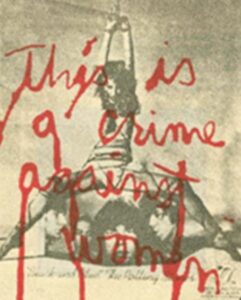 My media activism began in 1977 through a group called Women Against Violence Against Women. WAVAW began in Los Angeles when feminists rebelled against a promotional campaign for the Rolling Stones album Black and Blue . . . The visuals featured . . . a stylized photo of a woman bearing bruises and a gag in her mouth that was captioned “I’m black and blue by the Rolling Stones and I love it!” Feminists were known to scrawl their own messages across these promotionals.
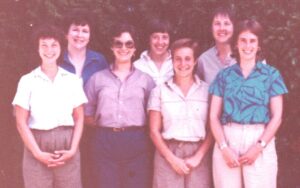 Before there was Safeplace, there were the Rape Relief and the Women’s Shelter programs at the Olympia YWCA. Each had a paid coordinator, with the work of the programs carried on by trained volunteers. That work initially involved taking calls from women who had been battered or sexually assaulted to support them through the police reporting process, hospital exams, finding shelter (if needed), and accompanying them to court. In time, an educational component evolved as both groups were called on to speak to community groups about the problems we addressed. It was cutting edge feminist work, and our community was among the first in the US to establish these programs.
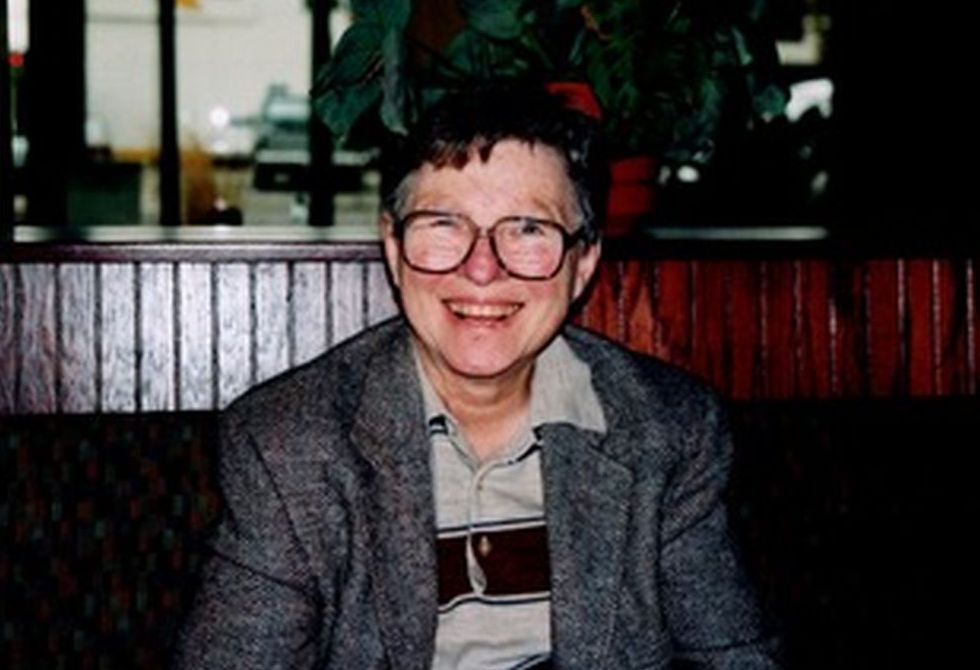 They say, “What goes around comes around.” Forty years ago, the Daily Olympian (as it was then named) did not serve our community well. The editor-in-chief turned a blind eye to local social and political issues. The newspaper was generally silent on problems and initiatives concerning race relations, gender, growth management, waste reduction, the environment. When the newspaper did glance at any of these issues, it was with a jaundiced eye . . . One of the people who was angry about the newspaper was Margery Sayre.
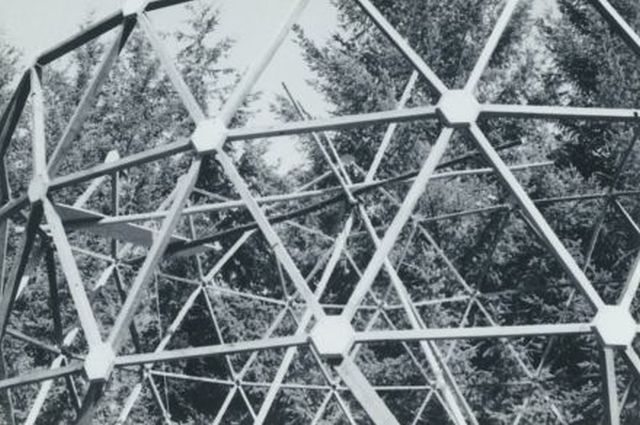 At one point in the evolution of Cold Comfort Farm the commune members decided to build a geodesic dome. We were then faced with the challenge of finding the materials. The word went out via the invisible network that connected the devotees of the “buy nothing” ethic. The power of a community to “manifest” whatever was needed had proved miraculous in the experience of back-to-the-landers everywhere. The fact that we were seeking material for a geodesic dome clearly helped stimulate and activate that network. What we needed for the frame was a bunch of 2×6s, the longer the better