ACTIVISM
Remembering The Link
By Emily Ray
This story originally appeared in Works in Progress in 2010 shortly after Margery Sayre passed away and again in 2020. It was titled Citizen Journalism: LINK Founder’s Death Prompts Historical Musings.

They say, “What goes around comes around.” Forty years ago, the Daily Olympian (as it was then named) did not serve our community well. The editor-in-chief turned a blind eye to local social and political issues. The newspaper was generally silent on problems and initiatives concerning race relations, gender, growth management, waste reduction, the environment. When the newspaper did glance at any of these issues, it was with a jaundiced eye. Legislative sessions right here in our capital city might have happened on another planet.
Electronic communication and the ubiquitous blogs of today were still in the distant future. Those of us with urgent causes felt cut off, marooned, unable to reach like-minded people.
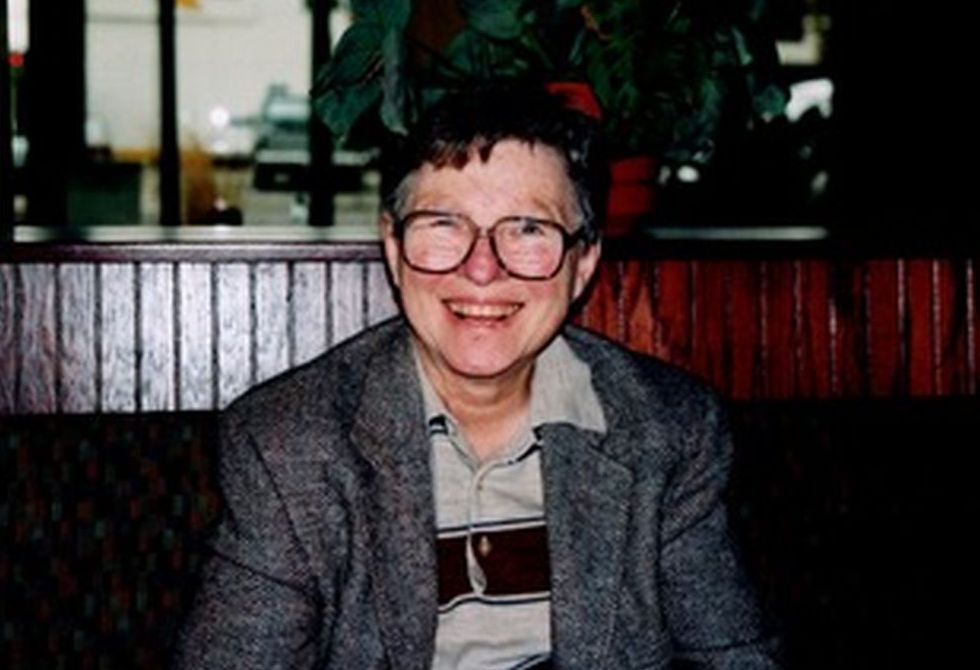
One of the people who was angry about the newspaper was Margery Sayre. With her partner Jocelyn Dohm, owner of the Sherwood Press, she gathered some political allies. The outcome of this meeting was The Link newsletter, an early example of citizen journalism in Olympia.
Our first issue hit the post office in January 1970 and we published monthly until we disbanded three years later. Six to ten legal-sized pages each month jam-packed with local news, all for a modest subscription cost of $2 a year! At its peak circulation, The Link served 900 households. A total of 70 people eventually helped produce it.
Our purpose, boldly stated in our inaugural issue, was “to give liberals and their friends in Thurston County a thorough, reliable, untimeconsuming and inexpensive way of telling each other what they are doing and thinking and what they wish others of like persuasion would help them do.”
We said we viewed liberals as persons who look at politics and economics and institutions from the standpoints of general social well-being and individual liberties. “Sometimes these two criteria reinforce each other; sometimes they seem to contradict each other,” we noted. These sorts of contradictions continue today. Think of those of us who want universal health care and agree with mandatory health insurance but at the same time are champions of individual rights in general.
A Calendar of Events for the Action-Minded was core to The Link and Margery’s particular focus. We typically advertised activities of organizations like the League of Women Voters, the American Civil Liberties Union, and the Washington Democratic Council. We published the appeals of various organizations for volunteers to leaflet, march, serve on phone lines, campaign for candidates, boycott agricultural products, or donate money.
Our pages show the earliest stirrings of the Thurston Urban League, the Nisqually Delta Association, the Society of Friends, the Olympia Food Co-op, KAOS radio station at The Evergreen State College, the Community for Interfaith Celebration (originally the Community for Christian Celebration), and the Olympia chapters of the Episcopal Peace Fellowship, the Sierra Club, and the National Organization for Women. BLOSSOM (Basic Liberation of Smokers and Sympathizers of Marijuana) also sought support though our pages.
We advertised Group Health Cooperative’s formative efforts here and the promise of full health care for a family of four, for $35 a month. Through The Link, readers learned about environmentally safe detergents, where to recycle paper, bottles, and cans, and where to get support for breastfeeding. During legislative session, they learned about bills of potential interest. Today’s young activists might see these topics as ho-hum, insignificant, but in the early 1970s they represented brave thrusts in new directions.
Two subjects remained uppermost: the Vietnam War and Native American issues. We publicized opportunities for draft counseling and peace activism, and followed Indian fishing and cultural survival efforts.
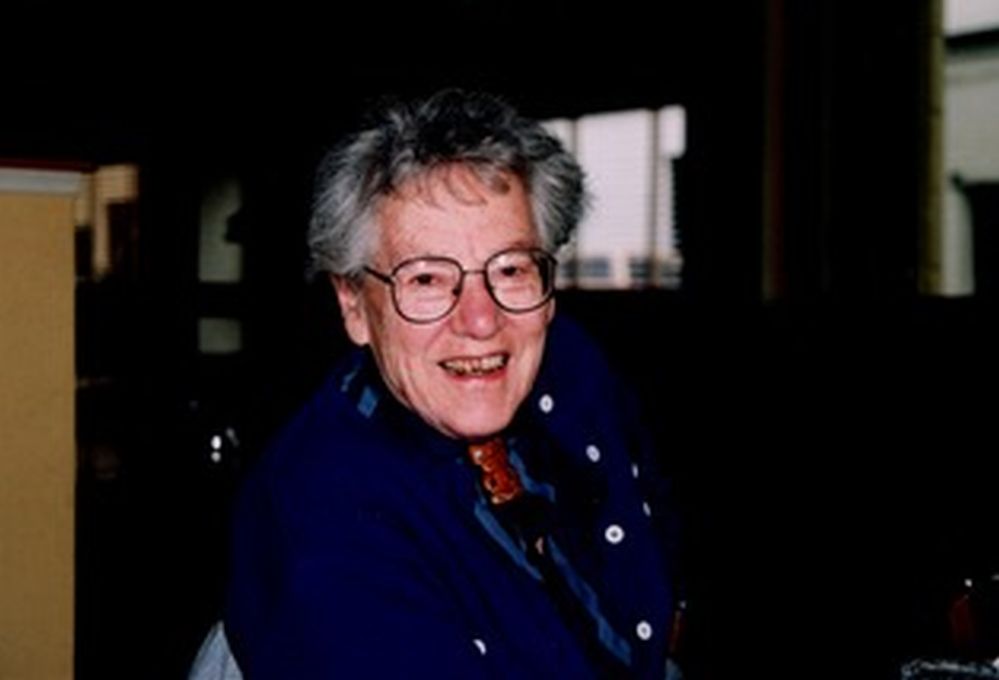
The editorship rotated among a number of people. However, the philosophical underpinnings were usually written by Jocelyn or Margery. Those of us who served as editor could expect Marge to arrive. I recall well the scraps of paper she would pull out of her purse, pockets, and folders. These became the entries in the month’s calendar. We also had a chance to visit while I typed away at my portable manual typewriter on the kitchen table, and my son Josh played nearby on the floor.
Many people provided information for The Link. We handed reporters a tip sheet, describing interview techniques including what questions to ask and what to say if asked about the purpose of the newsletter. The tip sheet stressed that items were to be mainly local, current, and activist-oriented.
Peg Wortman, one of the frequent editors, made order out of our chaos by compiling the policies we seemed to be following but had not articulated. She also listed all the names and contact information for the people who carried out the many tasks involved.
Printing of The Link happened in two stages. Jocelyn pre-printed the masthead in color, and the issues were run on a mimeograph machine at the office of the League of Women Voters in the basement of the old Governor Hotel. We donated $3 to the League each month for this use.
The Link was more than a newsletter—it became a mini-community. Every month volunteers would gather at the home of Hortense Allison to fold, staple, and stamp the newsletter. Hortense was, in a sense, our spiritual grandmother. Then in her upper 80s, she had lived on a commune and been part of the Garment Workers’ Union. She was still an active member of the American Communist Party, a connection she kept fairly private. Our folding parties were full of laughter and camaraderie. Children were always welcome. My son at age four became an expert stapler.
About the time our volunteer energy flagged, new young organizations started to become the missing links between like-minded people. The Daily Olympian began to give more space and fairer coverage to “our” concerns, including announcements of upcoming events. In our farewell issue we said:
“This month, The Link completes its third year. With the passing of this time and last month’s national election in which we feel we helped to give Americans a chance to choose modesty and peace instead of greed and war (a chance they blew), we bring The Link to an end.
“We hope The Link has done what it set out to do: to put liberals in Thurston County in touch with one another. We think the idea is still a good one, but we feel that it is time for the few on whose shoulders the bulk of the work has fallen to get back or get on to doing some other things.
“And we are just a little concerned that we may have gotten in a rut. The other day we got a message reading, ‘As a liberal, I consider my goal the well being, and therefore the unification, of the human race. The Link is an attempt to divide people, rather than unite them.’ We surely don’t want to do that.
“So, we leave you with a few suggestions about groups hereabouts who help to keep people united . . .”
Then followed a list of “good guy” organizations with newsletters. The editor of the first and last issues was Margery Sayre.
After we ceased publication, Jocelyn noted that we still had $300 in the bank. What should we do with it? How better to decide than to have a party? Several dozens of us gathered for a potluck at Marge and Jocelyn’s home, then on Fish Trap Loop. We recounted our adventures with The Link, remembering our triumphs and embarrassments along the way. At the end, we pondered the ways we could spend our treasury. We voted unanimously to contribute our money to a “good guy” cause. With that, The Link officially ended.
The Link didn’t really end, for me, though, until Marge Sayre’s death this last October 7, 2010. She and Jocelyn, who died in 2003, were the energetic core of our little enterprise. Marge’s death severed my link with those adrenalin-filled days of righteous campaigning.
Today, The Olympian is a thin vestige of a newspaper. Its circulation peaked in 1998 and is now just 60 percent of that level. It is handy for movie listings (although not always correct), obituaries, and snippets of news from here and around the globe. It goes to bed so early that important civic events get little or no coverage.
Margery’s caregiver of seven years, Sandia Slaby, became fully aware of Margery’s strong interest in community affairs and activities. Sandia noted that to the end of her life, Marge would scour every possible source for information about events in our community, and would either write them onto her own calendar, or file them in her month-by-month events FILE! Sandia said, “I believe she did this for a few reasons. First, being an informed, active citizen was of utmost importance to her. Second, her community was pivotal to her, and had been all her life (I went to her SEVENTIETH KINDERGARTEN reunion with her in New Jersey with people she still cared about and enjoyed connecting with and having conversations with about current national and local issues). And third, (contrary to how she was commonly perceived) she was a people-person; she craved intimate connections with others, and she mostly knew how to achieve that through intellectual engagement.”
Margery’s recent sentiments about her town’s daily newspaper, The Olympian, were no secret. Sandia reported she witnessed Margery raging frequently, “It doesn’t serve Olympia!” nearly anytime (and it was often in recent years) when her friends or strangers alike mentioned THEIR dissatisfaction with what that paper had become as a news source.
Sandia remembers that Margery toiled for a few years about whether to cancel her subscription to The Olympian. “Before she did so, as with most of her business interactions, Margery Sayre walked in to speak in person to the editor,” Sandia said.
“What happened to the Events page?” Margery barked. “The paper doesn’t even list WHAT is happening WHEN in OLYMPIA anymore!”
“Margery clearly felt that her interests had fallen on deaf ears that day, and she cancelled her subscription. But only a few weeks later, when she found out how much it was going to cost her to buy a separate TV Guide—almost the only information of value that The Olympian had been providing her in recent years—she resigned herself to a partial subscription just to get their TV listings again,” Sandia said.
A variety of other sources of local information have emerged through the years. Excellent examples include Works in Progress, Green Pages, Olympia Power and Light, The Cooper Point Journal, The COUNTER Point Journal, OlyBlog (devoted to citizen journalism), and Janine Gates’s Little Hollywood and video interviews on Everyday Olympia and TCTV.
Yet, multiplicity of information sources may create a new problem: How do we keep track of all the issues and schedules? How can we avoid good causes stepping on each other’s toes as they plan fund raising events? What emerging causes have not yet found a voice?
For some people, Thurston County Progressive Network (TC Pro-Net) Community Events Newsletter is a major part of the answer. Although Margery never learned to use computerized information sources, she did participate in events TC Pro-Net put on to pull progressives together, Sandia said. At Sandia’s urging, I gave TC Pro-Net closer examination. I have to agree with her—it is the modern version of The Link. A quick perusal of a recent issue reveals announcements relating to a possible addictions ministry, women’s rights, PFLAG, city council’s consideration of heights on the isthmus, an alternative gift fair, a write-a-thon against the death penalty, and a peace vigil. [Editor’s note: TC Pro-Net is no longer active].
Marge Sayre and friends were up to the challenge of linking progressives in 1970. Forty years later, a new cadre of activists is linking progressives together using electronic technologies. With information comes the potential for involvement and the power to bring about positive change. Margery knew that. She was called a muckraker by some, but she knew that speaking up and organizing was what it took to make the world a better place. With all this new technology helping us network with like-minded people, may we make Margery proud.
People involved at the inception of The Link:
Hortense Allison
Christine Clishe
Jocelyn Dohm
Hu Favaro
Bill and Joanne Larsen
Marjorie Montgomery
Bob Plaja
Dave and Emily Ray
Dorothy Robinson
Margery Sayre
We encourage readers to contact us with comments and corrections. Disclaimer