ACTIVISM
Glen Anderson Tribute
1948 – 2024
By Anna Schlecht
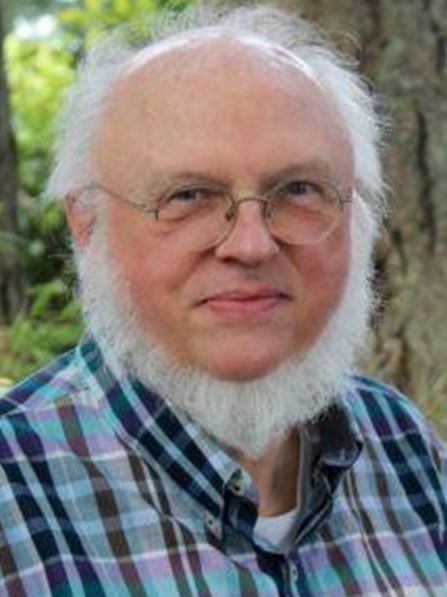
The first time I saw Glen Anderson was likely at a protest, although I first met him while picking something up from him at his day job. Glen was the first hardcore activist I met who devoted his life to doing political work, yet somehow maintained a steady job.
Glen worked for the Washington State Department of Personnel, so I went to his office at the corner of Franklin and Legion Way. The building had been a Sears department store before the Westside Mall opened. It was remodeled to be the Department of Personnel back when it was a tiny operation. It took me a while to find his office–upstairs, through a warren of makeshift offices typical of a low-budget remodel. While he wore a button-down shirt and sat at a desk, his long hair and Amish-style beard set him apart from the other State workers. That and his activism.
I was intrigued: here was a guy who embodied what my dad told me as I left home with a backpack and guitar to head out West, “That’s great if you want to play that guitar and protest everything. But you oughta get a government job with benefits!” At the time, my idea of a steady job meant anything longer than three months. And it seemed beyond the pale to go work for a government you hoped to overthrow.
Whatever I picked up from Glen, it was certainly something that he had cranked out on his mimeograph machine. Sometime thereafter, I went to a meeting at his house and realized his mimeograph machine was his most prized piece of furniture, right smack in the middle of his home. I helped to turn the crank on the machine to print out one of the many documents he produced as the Chair of the local chapter of Fellowship of Reconciliation (FOR). The smell of the ink and the sounds of the machine were as central to his home as the smells and sounds of dinner cooking in the average person’s home.
I later learned that Glen was a conscientious objector during the Vietnam War based on religious beliefs. Glen, having been raised a Scandinavian Lutheran, embraced a Jesus who was all about peace and totally against war. Glen got a deferment from military service in 1972 and began a lifetime of peace service by getting involved in the Fellowship of Reconciliation. In 1976, he launched an Olympia chapter, which quickly became one of the most active in the entire country.
Our paths crossed many times after I went to his office. I occasionally showed up at the Wednesday afternoon peace vigils in Sylvester Park that Glen initiated in 1980 as a way to maintain a visible presence for peace. This vigil expanded each December to become a Holiday Peace Vigil, attracting dozens and sometimes hundreds of participants. Much later, he expanded again to host a weekly Friday night vigil at Percival Landing, an event that became the go-to location to protest any injustice that had occurred in the past week.
Later still, I joined with Glen and Bob Zeigler on a delightfully dead-ended political farce. This was mid-1987 when President Reagan was in office and First Lady Nancy Reagan was running her sideshow project, “Just Say No to Drugs,” offering grants to community-based groups to wage a war on drugs. Our big idea was to send in an application titled, “Say No to the Contras to Say No to Drugs.”
We came up with a clever name and asked Margie Gaffney, who was a lawyer, to help us set up a nonprofit corporation with the State. Bob was our president, although we called him the “Bobwan” after the Bhagwan Shri Rajneesh who was then infamous for his Rajneeshpurim cult based in Antelope, Oregon. Glen and I rounded out the officers. We got together for a few evenings over beer and pizza to group-write the application. Each time, we howled with laughter as we crafted our explanation of how stopping the CIA-funded Contras would stem the drug trade in the US. Around that time, Oliver North testified at a Congressional hearing that it was a “neat idea!” to fund the covert US military intervention against the Sandinista Government by selling drugs to inner-city people of color.
Needless to say, we did not get the grant, but we did get a priceless letter in response from one of Nancy Reagan’s staffers who thanked us for applying. I am sure there’s a file on our grant application with the original rejection letter somewhere in Glen’s many boxes of papers.
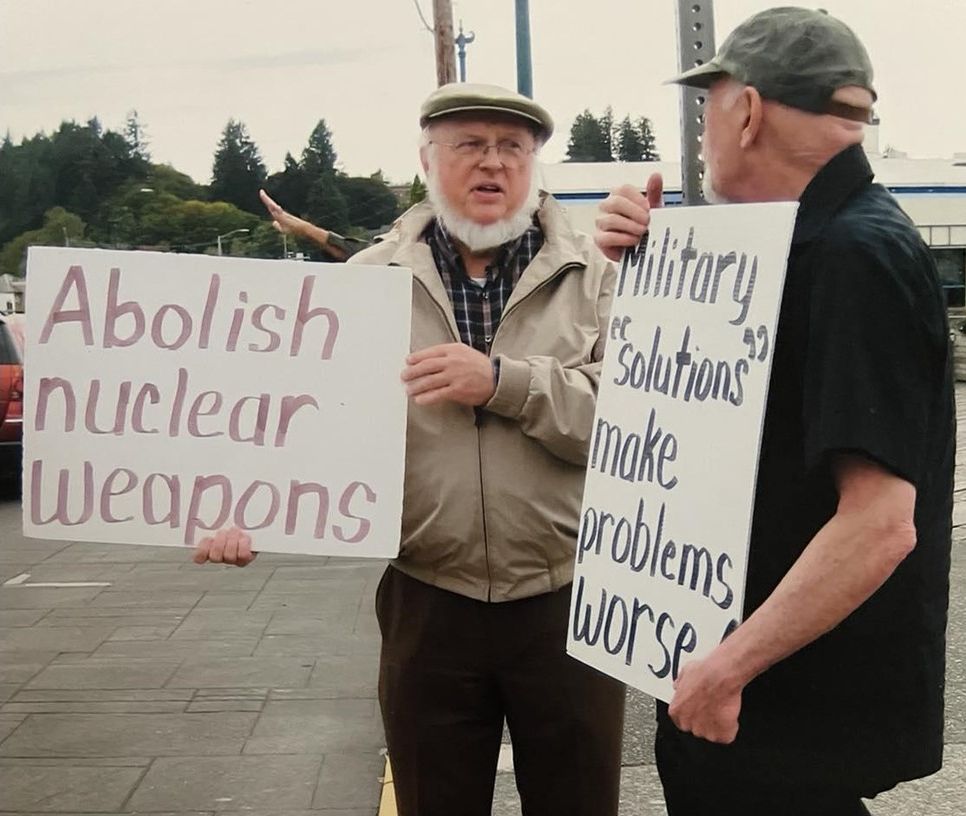
Over the decades, Glen worked on a broad range of issues, including nuclear disarmament, the death penalty, and opposition to war. He utilized a range of tactics, including organizing protests, testifying to the legislature, and producing the monthly Olympia FOR newsletter. Glen hosted numerous Evergreen interns who learned about non-violence principles while cranking out newsletters on his mimeograph machine. For many years, Glen hosted a monthly TV program that explored these issues and more, inviting local activists to join him on each episode.
In 2017, Glen received the annual Evan Ferber Peacemaker award from the Dispute Resolution Center (DRC) of Thurston County in recognition of his lifetime of promoting peace. Thurston Talk ran a piece on Glen’s work at the time of the award, saying that Glen received his award because he had truly lived his mission to teach and promote nonviolence. No surprise, Glen had been part of creating the DRC, telling Thurston Talk that, “When Evan wanted to start a group back in the ‘70s, I helped put him in contact with other like-minded people, so I’ve been involved with the DRC since the very beginning.”
Glen Anderson was a lifelong activist, never wavering in his dedication to promoting peace on all fronts. He remained a steady proponent of non-violence in local activism. We are fortunate to have called him our friend and fellow activist. May his memory be an inspiration to continue to stand up for social justice.
We encourage readers to contact us with comments and corrections. Disclaimer